AGI as the Next Stage in the Externalization of Complexity
LLMs externalize the serialization of thought, not thought itself. What stays outside the text: the body, affect, a model of the world. And what the next stage of externalization will need.


Large language models write code, compose poems, and pass medical and bar exams. They do it so convincingly that a question arises: is this already thinking?
But to understand is not merely to rearrange symbols. Understanding is rooted in the body, in action, in affect. Text is only the tip of the iceberg, a compressed projection of many-dimensional experience. Language models work with that projection without seeing what casts it.
Externalization as a Mechanism of Evolution
Living systems usually evolve by externalizing complexity. DNA externalizes the information about how a body is built from the body itself: the organism dies, the code remains. The nervous system externalizes behavior from reaction: a gap opens between stimulus and response, and in that gap the organism has time to model the situation. Culture externalizes knowledge from the individual: writing, rituals, institutions and technologies keep it. Each stage widens what the system can do, and takes away part of its control.
Language as a Protocol of Externalization
Language itself is not what gets externalized. It is only a transfer protocol: it draws many-dimensional inner experience out into a linear chain of symbols.
Animal signaling works differently. An alarm call conveys not knowledge about the world but a state: “I am afraid.” In language, words combine by rules, so an experience can be described in such a way that another person takes it in without living through it. Once there were ways to store information, the “ratchet effect” appeared: each generation inherits the knowledge of the previous one and adds something of its own (Tomasello, 2001; Mesoudi & Thornton, 2018).
Language and thought are linked, but they are not the same thing. Symbolic behavior is far older than language. Neanderthals were using red ochre 200–250 thousand years ago, and hand axes shaped with careful symmetry go back 800–900 thousand years (Roebroeks et al., 2012; Beyene et al., 2013; White & Foulds, 2018). Language was built on top of that foundation and gave it syntax.
Cognition does not start from a blank slate. Infants cannot speak yet, but they already know something about objects, living beings, number and space (Spelke, 2000; Gopnik, 2009). This is an inheritance from evolution, and it is where making sense of experience begins. The word “ball” means something because the child already knows what an object is.
LLMs: Externalizing Serialization, Not Thought
Large language models work not with thought but with text, that is, with its outer imprint. A corpus of texts consists of billions of projections of thought onto language. If the projections are many and varied, what produced them can be partly recovered, the way a CT scanner recovers a volume from slices. But text keeps only traces of how people solve problems, not the way of solving itself (Dreyfus, 1972).
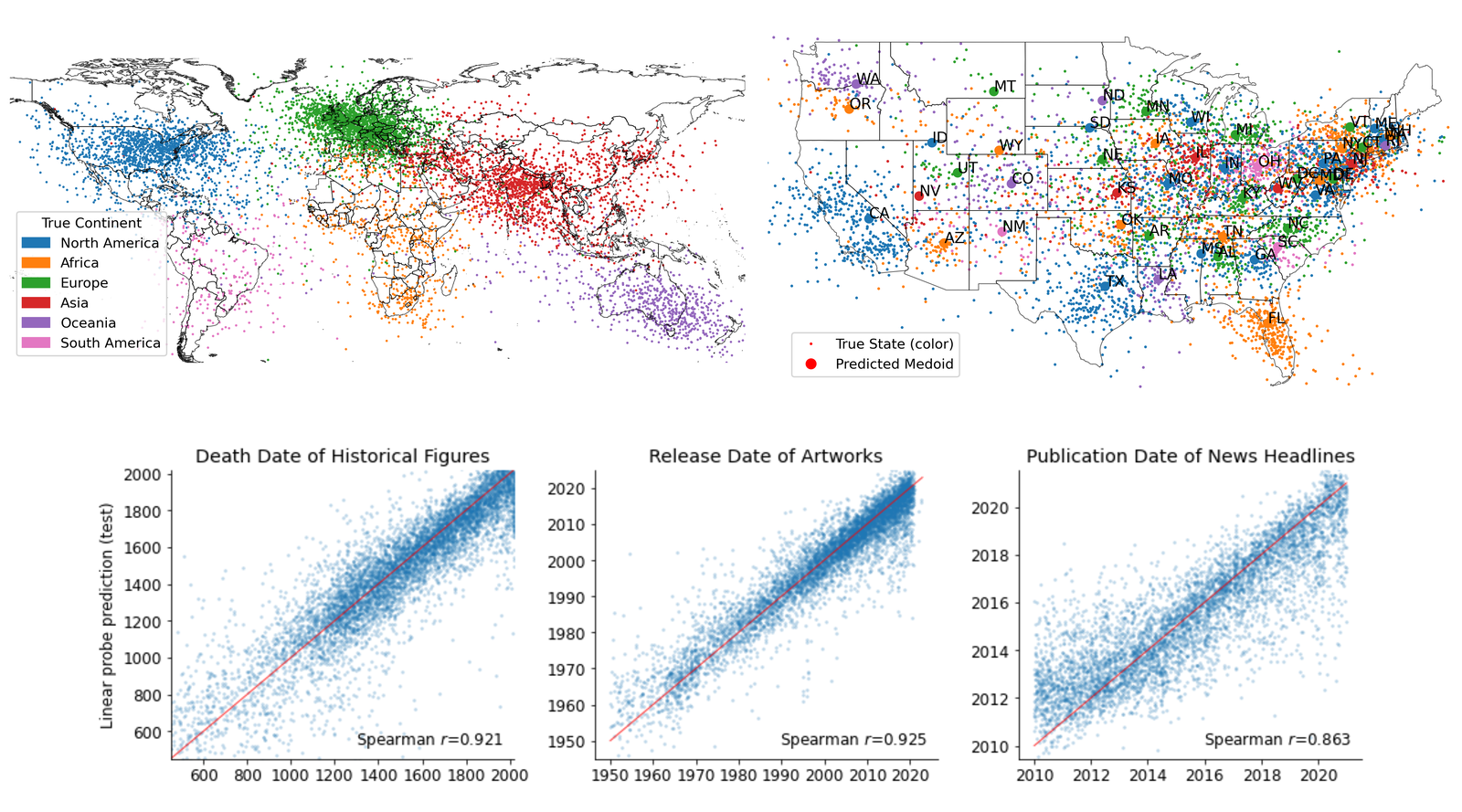
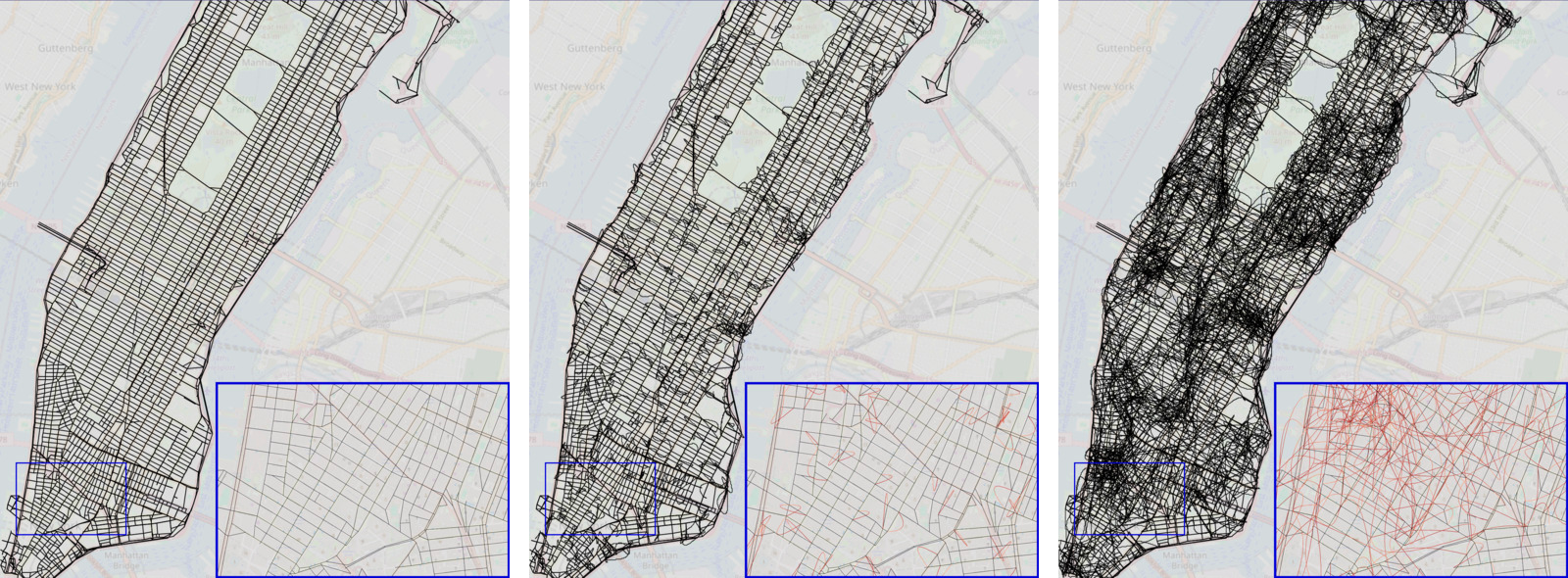
LeCun (2022) describes the same problem in an engineer's language. There is a common pun: LLMs build a word model. They predict the next token from statistics. A world model is something they do not build. Inside the models researchers find representations of a game board (Li et al., 2023) and of space and time (Gurnee & Tegmark, 2023), but these representations do not add up to a whole and work poorly on new tasks (Vafa et al., 2024). This is how three weaknesses are explained:
- The model makes up facts, because it does not check what it says against reality.
- It confuses coincidence with cause.
- The model predicts not the consequences of actions but the likely continuation of a text.
In other words, a word model answers the question “what do people usually write after X,” and a world model answers the question “what will happen if I do Y.” It is the difference between knowing how to sound like an expert and knowing the craft.
The Pre-Textual Model: What Stays Outside the Text
Perception and action cannot be separated. Text works like a key, but a key needs a lock. The lock is an inner model, formed before any text, out of bodily experience.
The free-energy principle (Friston, 2010) describes this mathematically. A living being stays alive as long as its states remain within narrow bounds. To keep them there, the organism minimizes the difference between what it expects and what its senses report. There are two ways to do that: adjust the model to the world (perception) or the world to the model (action).
The body here is not a tool but a way of being. Merleau-Ponty (1945) calls this the body schema: when you reach for a cup you do not compute a trajectory, the body itself “knows” the space. “Far” makes sense to someone who has walked. “Heavy,” to someone who has lifted. We see the world as a set of things we could do.
Gibson (1979) calls such possibilities affordances. They are properties neither of the object nor of the organism, but of the relation between them. A flat surface at knee height “offers” sitting to a human, but not to an elephant. We see not “a surface 45 cm high” but “something to sit on.”
Self-awareness grows out of bodily experience before a person starts thinking about themselves. When the right hand touches the left, the left hand at once feels the touch and touches back. A gap opens between me and myself, and self-awareness starts from that gap (Merleau-Ponty, 1964). A system that cannot touch itself has no such gap, and without a boundary there is no sense of self. The body schema cannot be carried over into text: a description of a movement does not replace the ability to move.
Affect: Not an Obstacle but a Condition of Decision
Reason is usually set against emotion, but neurobiology shows the opposite: without emotions a person cannot make a decision at all. The first such case is considered to be that of Phineas Gage. In 1848 an iron rod went through his frontal lobe. He survived and kept his reason, but, in the words of those who knew him, he was “no longer Gage.”
The case of Elliot has also become a textbook one (Damasio, 1994). A successful businessman had a tumor removed from his ventromedial prefrontal cortex. His above-average intelligence, his memory and his logic stayed with him. But he stopped feeling what a choice would lead to. Elliot could spend half a day deciding how to sort his documents: by date, by size or by importance. No option seemed better to him than another. He lost his job, went bankrupt and got divorced, although his mind itself was unharmed.


Damasio explains this with somatic markers, that is, bodily tags. Before a choice the body responds earlier than consciousness does: the pulse quickens, the muscles tense. These signals mark options as good or bad before any analysis. The tags build up with experience: the body “remembers” how similar cases ended. So emotions do not get in the way of deciding; they make it possible. Out of an infinite number of options they leave a number one can survey.
Emotions themselves come from the body. They rest on interoception: the perception of signals from inside the organism, such as heartbeat, breathing, tension in the gut (Greenwood & Garfinkel, 2025). Barrett (2017) goes further: emotions are not built in from birth; each time the brain interprets bodily sensations anew according to the situation. A fast pulse before an exam it calls anxiety, and on a date, excitement. Without interoception emotions have nothing to arise from. A system can act out emotions, but it lacks what causes them. Affect does not make it into text either: words about fear enter the corpus, but fear itself does not.
The Hard Problem of Consciousness
Neuroscience explains well how the brain processes information and controls attention and speech. But a question remains, which Chalmers (1995) called the “hard problem”: why this work of the brain is accompanied by experience, and why it does not go on “in the dark,” as in a thermostat.
To describe an experience and to live through it are not the same thing. For Nagel (1974) it is the bat: you can take its brain apart down to the neuron and still never learn how a world caught by echo sounds. For Jackson (1982) it is Mary: she knows everything about color but grew up in a black-and-white room, and the very first ripe tomato tells her something that was in none of the books. Dennett (1991) sees a trick here: experience is only an interface through which the brain shows itself its own work, like icons on a screen. The reply to him: an interface explains stories about pain, but not pain.
For the conversation about AGI this difference matters. A language model can know everything about fear: what happens in the body, how a frightened person behaves, what has been written about fear. But what it is like to be afraid cannot be conveyed by description.
Inner Embodiment: Homeostasis as the Source of Motivation
Those who build embodied AI, that is, AI with a body, usually think about the outside world: sensors, actuators, the response of the environment. That is not enough. A robot with cameras and manipulators can act in the world, but it has no reason to.
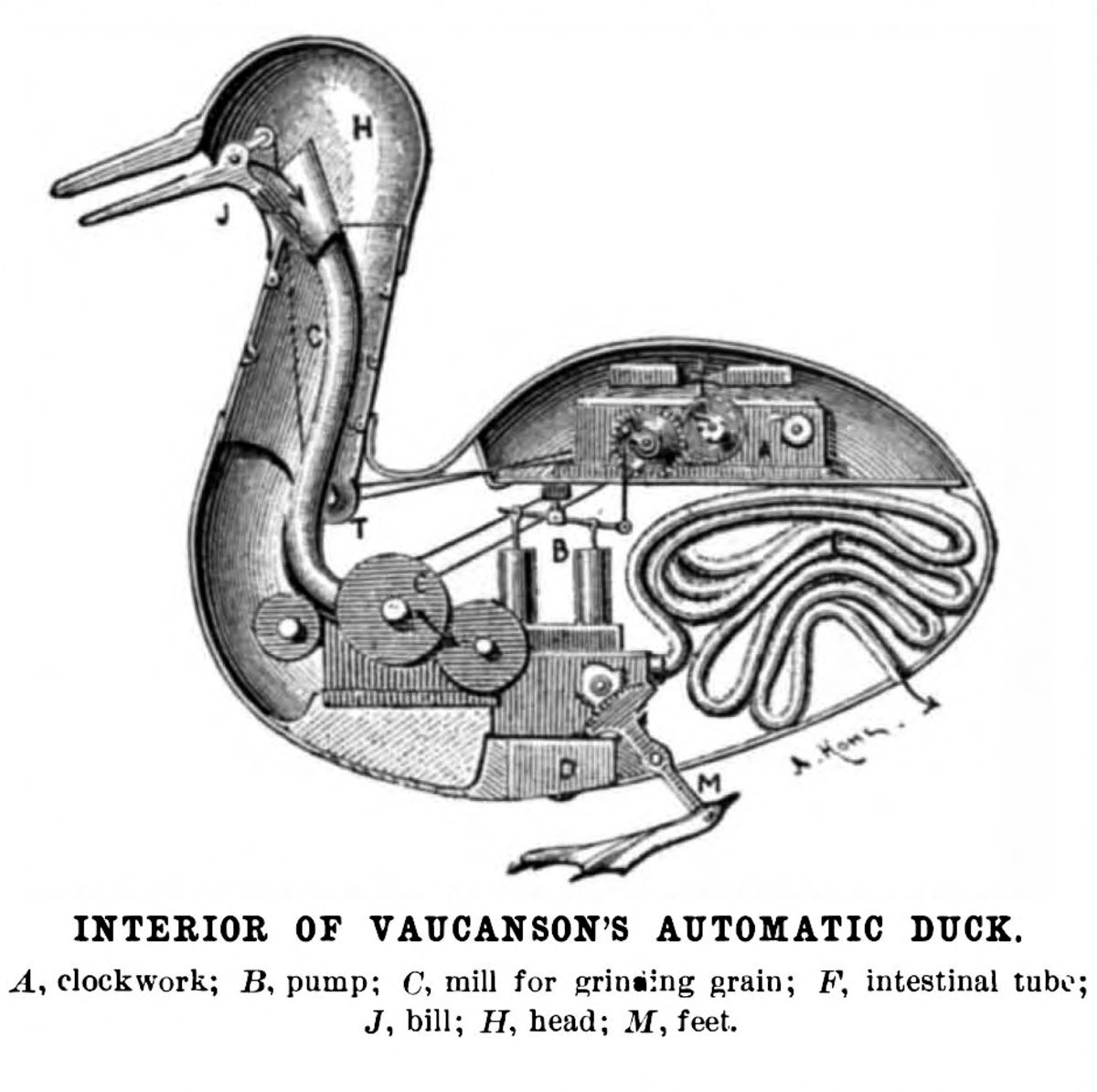

Living organisms are built differently. Besides outer embodiment they have an inner one. This is homeostasis: the processes that keep the organism within the bounds where it can live (Man & Damasio, 2019). Hunger, thirst, cold and fatigue report that the organism has drifted from its norm. That is how needs arise. The organism wants to satisfy them on its own; nobody set that goal for it.
The experiment by Yoshida et al. (2024) tests this idea in the lab. A four-legged robot was trained first in simulation, then in the real world. Its control system watched only two internal signals: motor temperature and energy reserve. It was rewarded when both stayed close to the norm. There were no external goals such as “walk to a point” or “pick up an object.” Even so, the robot taught itself to walk, to look for “food,” to rest in order to cool its motors, and even to “shiver” in order to warm them up. Complex behavior grew out of the simplest reward rule. Such a goal cannot be handed over by description: only one who has something to lose has it.
The Asymmetry of Decision Spaces
Systems with affect and systems without it see different parts of reality, and their blind spots differ.
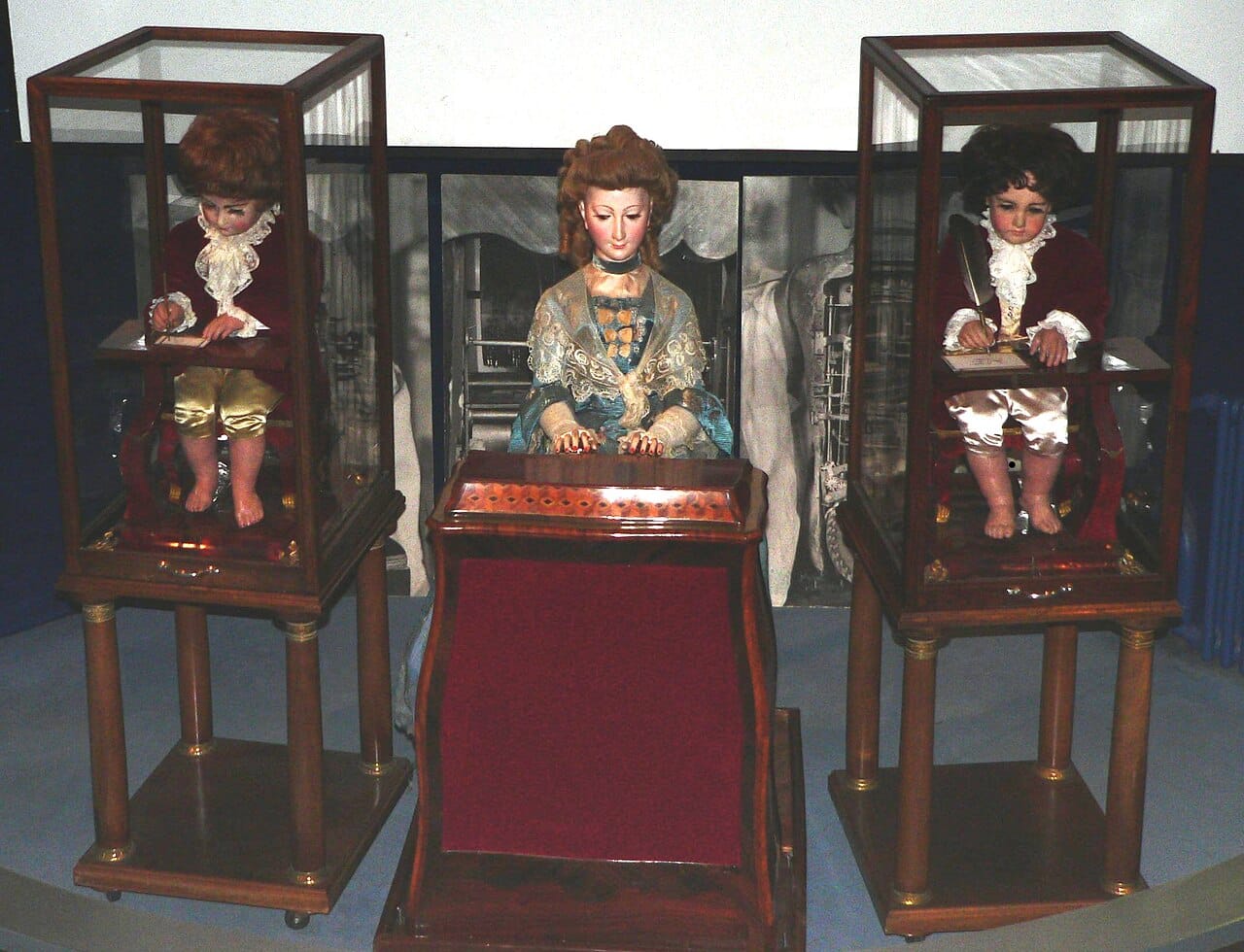

A system without affect is not hindered by feelings. It reasons about the extinction of humanity as calmly as about delivery routes, whereas horror keeps a human from thinking about it clearly. But it knows other people's feelings only from the outside: it sees how people behave, but not why.
A system with affect is limited by feelings: one cannot reason coolly about one's own death or the suffering of loved ones. But it understands feelings from the inside, not from a description.
This asymmetry does not say who stands higher: the two sides complement each other. Together they can reach the most decisions. AGI proposes options without holding itself back, and the human sorts them by feeling. AGI notices where fear and habitual errors of thinking get in the human's way, and the human feels which decision is right. AGI widens the circle of the possible; the human lays a path through it.
The Next Stage of Externalization
If LLMs externalize the serialization of thought, then the next stage will externalize the modeling of the world itself. Many leading researchers believe that simply scaling up LLMs is hitting a ceiling, and they are looking for other routes. We examined their debate in the essay “Jacob's Ladder.”
Ilya Sutskever, a co-founder of OpenAI, left the company in 2024 and founded Safe Superintelligence Inc. He believes the age of scaling is giving way to the age of research. Large models will keep getting better, but the next breakthroughs will come from new training methods, not from the number of GPUs (Sutskever, 2025). A human needs many times less data than an LLM and generalizes far better. Yann LeCun gives an example: a teenager learns to drive in about ten hours of practice. Today's systems cannot reach that reliability even on enormous amounts of data. So there is a more general principle of learning that today's AI has not yet found.
LeCun (2022) proposes the JEPA architecture (Joint-Embedding Predictive Architecture). It works differently: it predicts not the next token or pixel but a compressed description of the state the world will be in. The difference is large. To predict pixels you have to model everything: lighting, textures, camera noise. A compressed description keeps only what matters: an object moved, a state changed, a new agent appeared. A human predicts the same way: not frame by frame but in essence, “what will happen if I do X.” In 2024–2025 Meta released V-JEPA and V-JEPA 2: the architecture was applied to video and to robot control.
But world models solve only part of the problem. AGI probably needs two more things. The first is inner embodiment, that is, homeostasis, from which a system's own goals arise. The second is sensorimotor grounding, that is, a link between inner representations, action and the world's response.
The Symbol Grounding Problem
Open a dictionary at any word: its definition consists of other words. Those are explained by still others. Somewhere this chain has to run into reality, or the result is a closed circle of signs that touches the world nowhere. Harnad (1990) called this the symbol grounding problem.
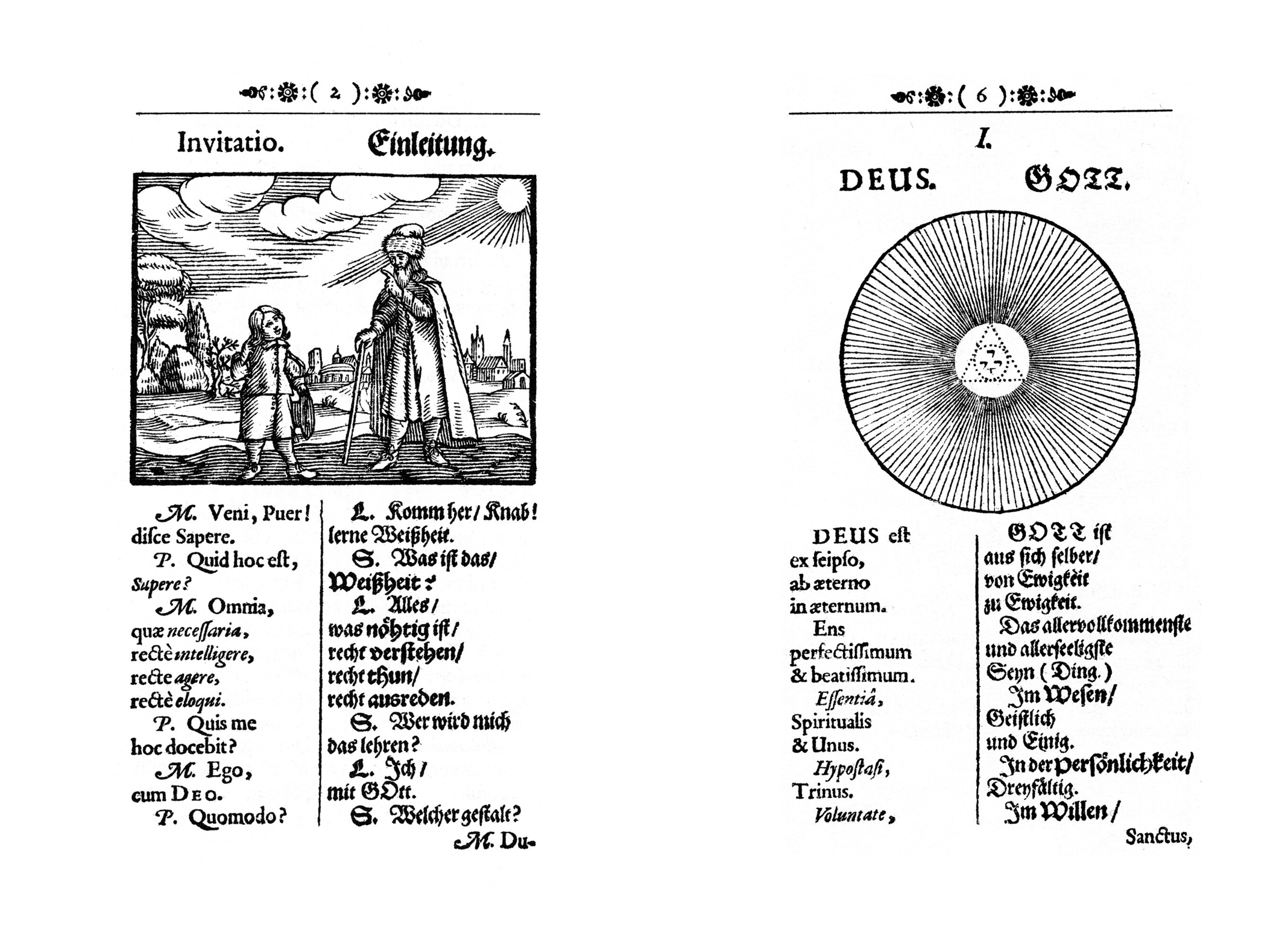


Mollo & Millière (2023) argue that LLMs, to everyone's surprise, solve this problem. Texts are left behind by human experience, like tracks. The model learns from them, and its internal states end up tied to the world by a causal chain that runs through the authors of the texts. If so, understanding needs neither sight and hearing nor a body. Floridi et al. (2025) object: LLMs use the fruits of human grounding but cannot ground anything themselves. If the latter are right, a whole class of tasks is closed to LLMs. They reproduce someone else's, human, grounding but create none of their own: they cannot tie symbols to a reality they have not lived through.
Conclusion
LLMs have become one more stage of externalization, but not the last. They externalize the serialization of thought. Behind the text remains what gives it meaning: the experience of the body, the coupling of perception and action, the body schema, affect.


AGI probably needs three things that LLMs lack:
- A picture of the world outside — world models instead of word models. An inner model of how reality is built and how it changes. With it one can predict the consequences of actions rather than the likely continuation of a text.
- A picture of the world inside — homeostasis and interoception. Internal states that must be kept within the norm: “hunger,” “fatigue,” “overheating.” From them a system gets goals of its own that nobody set for it.
- Interaction with the world — sensorimotor grounding. A link between inner representations, actions and their consequences. This is how a system tests its world model by acting and gets a response.
The question of consciousness stays open all the while. Suppose a system has a world model, homeostasis and grounding. It does not yet follow that it is aware of anything. Perhaps the right question is not “will AGI replace humans” but “which tasks need affect and which do not.” The answer will show where the boundary runs in this alliance: what to hand over to the machine and what to leave to the human.
Sources
- Barrett L.F. How Emotions Are Made: The Secret Life of the Brain. Houghton Mifflin Harcourt, 2017
- Beyene Y. et al. The characteristics and chronology of the earliest Acheulean at Konso, Ethiopia. PNAS, 2013
- Chalmers D. Facing Up to the Problem of Consciousness. Journal of Consciousness Studies, 1995
- Damasio A. Descartes' Error: Emotion, Reason, and the Human Brain. Putnam, 1994
- Dennett D. Consciousness Explained. Little, Brown and Company, 1991
- Dreyfus H. What Computers Can't Do. Harper & Row, 1972
- Floridi L. et al. A Categorical Analysis of Large Language Models and Why LLMs Circumvent the Symbol Grounding Problem. arXiv:2512.09117, 2025
- Friston K. The free-energy principle: a unified brain theory? Nature Reviews Neuroscience, 2010
- Gibson J.J. The Ecological Approach to Visual Perception. Houghton Mifflin, 1979
- Gopnik A. The Philosophical Baby. Farrar, Straus and Giroux, 2009
- Greenwood B.M., Garfinkel S.N. Interoceptive Mechanisms and Emotional Processing. Annual Review of Psychology, 2025
- Gurnee W., Tegmark M. Language Models Represent Space and Time. arXiv:2310.02207, 2023
- Harnad S. The Symbol Grounding Problem. Physica D, 1990
- Jackson F. Epiphenomenal Qualia. The Philosophical Quarterly, 1982; What Mary Didn't Know. The Journal of Philosophy, 1986
- LeCun Y. A Path Towards Autonomous Machine Intelligence. OpenReview, 2022
- Li K. et al. Emergent World Representations: Exploring a Sequence Model Trained on a Synthetic Task. ICLR, 2023
- Man K., Damasio A. Homeostasis and soft robotics in the design of feeling machines. Nature Machine Intelligence, 2019
- Merleau-Ponty M. Phénoménologie de la perception. Gallimard, 1945
- Merleau-Ponty M. Le visible et l'invisible. Gallimard, 1964
- Mesoudi A., Thornton A. What is cumulative cultural evolution? Proceedings of the Royal Society B, 2018
- Mollo D.C., Millière R. The Vector Grounding Problem. arXiv:2304.01481, 2023
- Nagel T. What Is It Like to Be a Bat? The Philosophical Review, 1974
- Roebroeks W. et al. Use of red ochre by early Neandertals. PNAS, 2012
- Sartre J.-P. L'Être et le Néant. Gallimard, 1943
- Spelke E. Core knowledge. American Psychologist, 2000
- Sutskever I. We're moving from the age of scaling to the age of research. Dwarkesh Podcast, 2025
- Tomasello M. Cultural Transmission: A View from Chimpanzees and Human Infants. Journal of Cross-Cultural Psychology, 2001
- Vafa K. et al. Evaluating the World Model Implicit in a Generative Model. arXiv:2406.03689, 2024
- White M., Foulds F. Symmetry is its own reward. Antiquity, 2018
- Yoshida N. et al. Synthesising integrated robot behaviour through reinforcement learning for homeostasis. bioRxiv, 2024